
Are Tar Coatings Effective?
Waterproofing your home to protect it from the many effects of moisture can be complex, as you have many options.
In a previous article, we talked about DIY wall sealants vs. hiring basement waterproofing professionals.
On a related note, this article explains commonly used tar coatings and why they are not permanent basement waterproofing solutions.
Let’s jump right in.
What Is A Tar Coating?
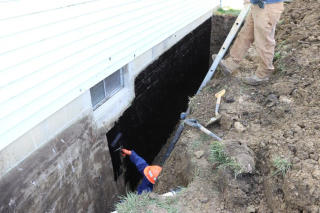
When constructing a home, builders commonly apply a waterproofing substance, known as tar coating or dampproofing, to the walls to prevent moisture infiltration. Another step includes installing a drainage pipe alongside the foundation’s footing to collect any water seepage.
While this time-honored method is relatively inexpensive to apply and can be effective as long as it is not damaged, it’s not without its flaws. The protective tar coating can deteriorate over time, affected by installation practices, cracks or holes in the wall, and exterior humidity and moisture.
Additionally, the drainage pipe can become damaged or filled with debris over time, compromising its effectiveness.
Some homeowners replace these systems, but doing so is problematic for several reasons. Replacement doesn’t prevent the same issues from recurring; the procedure is expensive and involves extensive digging that could severely damage your landscaping, extending well into your yard.
How Do I Know If My Tar Coating Is Failing?
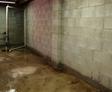
It’s not practical to dig outside your basement walls to check the exterior tar coating’s condition, but you’ll know it is damaged if your basement has these telltale problem signs:
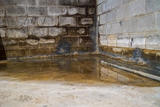
Don’t hesitate to contact your local basement waterproofing professionals at Foundation Recovery Systems when you notice any of these issues. The longer they continue, the damage worsens, and repairs become expensive.
We implement less invasive, longer-lasting basement waterproofing solutions through early intervention.
What to Know Next
Tar coatings are traditional waterproofing methods but do not guarantee long-term protection from moisture. Even if your home’s exterior tar coating remains intact, investing in a comprehensive basement water management system that includes interior drainage and sump pumps is best.
There’s a lot more to know about basement waterproofing methods, but you can learn more through our many informative resources. Keep checking back for new articles!
If you need effective basement waterproofing, you can get a free inspection from Foundation Recovery Systems. Just click the button below to get started!
FAQs
Although mold has a distinct odor, other factors like damp materials or plumbing issues can also cause musty smells in basements.
A dehumidifier can help reduce humidity and minor condensation on the walls but will not resolve underlying issues causing the wetness, such as leaks or poor drainage.
Employing waterproofing solutions like interior drainage and sump pumps is the most effective strategy. Additional measures like vapor barriers, dehumidifiers, and insulation provide further protection. Contact us for a free crawl space inspection and repair estimate.

Leah Leitow
Related Resources
Award-Winning Service










- 5/
- 5/
- 5/
- 5/
- 5/

Shae was amazing and was very informative! Definitely recommend him for future jobs!!
Shae was amazing and was very informative! Definitely recommend him for future jobs!!
- 5/
- 5/
- 5/
- 5/
- 5/
Foundation Recovery Systems exceeded my expectations from start to finish. Coleman was professional, knowledgeable, and took the time to…
Foundation Recovery Systems exceeded my expectations from start to finish. Coleman was professional, knowledgeable, and took the time to explain everything clearly. The crew showed up on time, and the work was done efficiently and with great attention to detail. I felt confident throughout the entire process, and the results speak for themselves. If you need foundation work done right the first time, I highly recommend Foundation Recovery Systems.
- 5/
- 5/
- 5/
- 5/
- 5/
Shae was an amazing technician. He was knowledgeable, polite and professional. He explained everything clearly.
Shae was an amazing technician. He was knowledgeable, polite and professional. He explained everything clearly.
- 5/
- 5/
- 5/
- 5/
- 5/
The Foundation Recovery Systems team was top notch. Jeremy and his crew were nothing short of professional throughout the entire process. …
The Foundation Recovery Systems team was top notch. Jeremy and his crew were nothing short of professional throughout the entire process. Jeremy took time out of his day to keep my wife and I informed until the project was completed. Would be happy to recommend Jeremy and his team to family and friends.
- 5/
- 5/
- 5/
- 5/
- 5/
This company is does a great excellent job and Aiden. The representative here doing the work was really talkative and knowledgeable about…
This company is does a great excellent job and Aiden. The representative here doing the work was really talkative and knowledgeable about his job and done a great job doing it.
- 5/
- 5/
- 5/
- 5/
- 5/
Hi, this is tehmana Mahmood, I had called yesterday for inspection, I got appointment for the very next day , Mathew Menge , came on time…
Hi, this is tehmana Mahmood, I had called yesterday for inspection, I got appointment for the very next day , Mathew Menge , came on time and called 15 minutes earlier, to confirm, had a fantastic service, I am so grateful and happy with his service, he is a gem , I am going to refer your company, I had a excellent experience, super happy, GOD bless you and everyone that work there , thank you
- 5/
- 5/
- 5/
- 5/
- 5/
Jared Wyatt was very helpful, informative, and was willing to explain every question we brought up.
Jared Wyatt was very helpful, informative, and was willing to explain every question we brought up.
- 5/
- 5/
- 5/
- 5/
- 5/
2 years ago I had FRS install 7 piers. This year they had to come out and adjust the piers. The crew Joseph Woodiel, Chance Spratley, and…
2 years ago I had FRS install 7 piers. This year they had to come out and adjust the piers. The crew Joseph Woodiel, Chance Spratley, and Andre Stuart were spot on in their communication and professionalism. They were patient with my questions, and helpful as I made requests and asked questions. Having to do this a second time was not desired, but Joseph and his team made it more painless than ever anticipated.
- 5/
- 5/
- 5/
- 5/
- 5/
What a hard working group of young men! Kincade D., River H., and Jordan M. are a fabulous team. Kincade is such a great leader. Very…
What a hard working group of young men! Kincade D., River H., and Jordan M. are a fabulous team. Kincade is such a great leader. Very informative, showed us steps every part of the way. Explained things so we understood exactly what was going on. Made us feel comfortable and informed. Polite and hard working, genuinely cared about the job they were doing!!! Thank you guys so much!!!
- 5/
- 5/
- 5/
- 5/
- 5/
FRS just finished up with the French drain system in our basement. Travis Steven's who set it up was great. Explained everything ,…
FRS just finished up with the French drain system in our basement. Travis Steven's who set it up was great. Explained everything , responded to all my emails and worked with us to get the job done in a timely manner. The crew was awesome .They Explained everything and had me do a walk through inspection and a bang up job with the cleanup. Thanks Travis and crew for a awesome job. Highly recommend.
- 5/
- 5/
- 5/
- 5/
- 5/
Jordon was very professional and answered all our questions throughly. He was very honest and informative about the work that will be…
Jordon was very professional and answered all our questions throughly. He was very honest and informative about the work that will be done and why. He is very kind, personable and trustworthy. We are very pleased with his representation of this excellent service of restoration. Thank you!!! 😊
- 5/
- 5/
- 5/
- 5/
- 5/
Jessie and Camron did a fantastic job on our driveway. Showed up on time and finished quickly with quality work.
Jessie and Camron did a fantastic job on our driveway. Showed up on time and finished quickly with quality work.
- 5/
- 5/
- 5/
- 5/
- 5/
Nathan Bright was amazing. Personable and professional. Super happy with everything him and his company had to offer.
Nathan Bright was amazing. Personable and professional. Super happy with everything him and his company had to offer.
- 5/
- 5/
- 5/
- 5/
- 5/
Kevin Macdonald is Awesome call him for all your foundation needs
Kevin Macdonald is Awesome call him for all your foundation needs
- 5/
- 5/
- 5/
- 5/
- 5/
Really good and efficient flooring feels level and solid after they fixed our foundation.
Really good and efficient flooring feels level and solid after they fixed our foundation.
- 5/
- 5/
- 5/
- 5/
- 5/
Cory Guerra came out today, as my service technician excellent knowledge, problem-solving addressing all issues great rapport very much…
Cory Guerra came out today, as my service technician excellent knowledge, problem-solving addressing all issues great rapport very much appreciate the expertise!
- 5/
- 5/
- 5/
- 5/
- 5/
Foreman: Jaxon Hudson CO: Wesley Ash Installer: Robert Smith Major props to the crew that worked our crawl space. Clearance was 22” at the …
Foreman: Jaxon Hudson CO: Wesley Ash Installer: Robert Smith Major props to the crew that worked our crawl space. Clearance was 22” at the entrance and 13” at its lowest. Although taking up some of the floors did help, this crew worked in some very uncomfortable spots in order to make our floors right. They were professional and respectful of the property and kept me informed throughout the process.
- 5/
- 5/
- 5/
- 5/
- 5/
Kevin creed and Blake Warlop came out today to do our yearly inspection. And we’re absolutely amazing. This visit keeps my hopes up in…
Kevin creed and Blake Warlop came out today to do our yearly inspection. And we’re absolutely amazing. This visit keeps my hopes up in getting this job correct.
- 5/
- 5/
- 5/
- 5/
- 5/
Mark and Donald Dykes went above and beyond when they installed our outdoor drainage system in Gibson City, IL. We got a late start cause…
Mark and Donald Dykes went above and beyond when they installed our outdoor drainage system in Gibson City, IL. We got a late start cause of a change in plan and they still finished the job that same day! They worked really hard and took only a few minute breaks to drink water. I did not see them on their phones. Great job guys!
- 5/
- 5/
- 5/
- 5/
- 5/
My experience with Foundation Recovery Systems, Bruce James was excellent. He walked me through the process until I understood what was…
My experience with Foundation Recovery Systems, Bruce James was excellent. He walked me through the process until I understood what was going on. Bruce took his time, with surveying the issues. He walked me through the process and his recommendations. The thing I like about it was Bruce was he did not pushing anything on me to sign right away, he understood what I wanted and how I wanted to proceed. Thank you Bruce James.
Publish Date:
Last Modified Date:
Our Locations
3349 Southgate Ct SW,
Cedar Rapids, IA 52404
(319) 220-5034
14678 E 925 North Rd, Building 5
Bloomington, IL 61705
6300 NW Beaver Dr.
Johnston, IA 50131
(515) 373-8491
7280 NW 87th Terrace, Suite C-210
Kansas City, MO 64153
(816) 774-1539
211 SE State Route 150
Lee's Summit, MO 64082
(816) 774-1539
1872 State Hwy M
Moberly, MO 65270
(660) 202-8662
3020 N. Martin Ave.
Springfield, MO 65803
(417) 612-8286
1625 Larkin Williams rd.
Fenton, MO 63026
(314) 207-9995