
What Is a Basement?
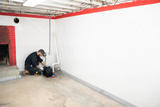
In a previous article, we covered “basement sump pump failures.”
Now, we’re taking a step back to discuss basements in general. The topic is broad, but we’ll start with a quick overview to cover the basics.
What Is a Basement?
A basement is a part of a building partially or fully below the ground. Most homeowners use it as a utility space for the breaker panel, fuse box, boiler, and air conditioning.
The below-ground nature of basements makes them prone to dampness and musty air, which creates the perfect breeding ground for pests and allergens. Thanks to advancements in waterproofing, homeowners can now use basements for more than just storage.
Basements allow homeowners to maximize the square footage of the main living area, which is particularly helpful for large families. It also makes a home that much more attractive to potential buyers when listed on the market. Other advantages of basements include cooler rooms during the summer and safe space during extreme weather.
Types of Basement Construction
There are several types of basement construction, each with unique characteristics, benefits, and potential drawbacks. Understanding these different types can help homeowners make informed decisions about the construction and maintenance of their basements.
Poured Concrete
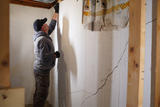
Poured concrete is a very common type of basement construction, preferred for its simplicity and sturdiness. It begins with pouring footings for the foundation, and then forms are used to hold the walls in place as they dry, resulting in a solid structure.
Precast Panels
Some builders choose precast panels to save time and money. These panels are foundation walls that are cast off-site and shipped to the building location for installation. They are made from high-strength concrete, which offers durability and strength.
Concrete Block
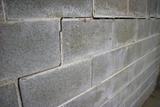
Concrete block construction is another popular and cost-effective option for building basements. These blocks are quicker to assemble than poured concrete and are reinforced with steel rebar for added stability.
Stone or Clay Tile Walls
In some older homes, the foundation walls are stone or clay tiles. These materials are often found in historic properties and offer a unique aesthetic. While generally strong, these materials can show signs of wear over time, especially in older constructions.
Understanding the Basics of a Basement
In this post, we provided a general overview of what a basement is, highlighting its common uses and the different types of basement construction, such as poured concrete, precast panels, concrete block, and stone or clay tile walls. Each type offers unique benefits and considerations, from durability to ease of construction.
There’s much more to learn about basements, so in our next article, we’ll explore “How to Choose the Best Sump Pump for Your Home.”
If you need professional help with your basement, Foundation Recovery Systems offers a quick, easy, and completely FREE inspection. Just click the button below to get started!
FAQs
Yes, by preventing water accumulation, a sump pump can help in reducing the moisture levels in the basement, thereby mitigating musty smells. It can’t do it alone, however; learn how to solve basement smells for good with a free inspection from FRS.
Insurance policies vary, and coverage is dependent on the nature and origin of the damage. Damages arising from lack of maintenance or general wear and tear are typically not covered.
Cleaning alone may not be sufficient; addressing the source of moisture and improving ventilation are crucial steps in permanently eliminating musty smells.
Related Resources

Award-Winning Service










- 5/
- 5/
- 5/
- 5/
- 5/

Matt Kobel was right on time for the appt. He was so polite and a great personality. He explained everything. With the experience i had…
Matt Kobel was right on time for the appt. He was so polite and a great personality. He explained everything. With the experience i had with Matt I would recommend this company. He is such a good asset for this company. High 5 Matt! Thank you!
- 5/
- 5/
- 5/
- 5/
- 5/
I had Troy conduct a mold inspection on my basement. Communication up to the appointment was excellent, and his professionalism was…
I had Troy conduct a mold inspection on my basement. Communication up to the appointment was excellent, and his professionalism was outstanding. Found no concerns with my basement and did recommend equipment that could aid with future problems. Would highly recommend this company!
- 5/
- 5/
- 5/
- 5/
- 5/
Saw a FB ad and clicked the link. My drive wat was cracking and sinking. Consequently one side of my garage was sinking and cracking our…
Saw a FB ad and clicked the link. My drive wat was cracking and sinking. Consequently one side of my garage was sinking and cracking our facade. A very nice and professional Man came out took some quick measurements and gave me a run down of what all was wrong. Gave me a few options. I did not want to take a chance on not doing the garage or the driveway so we did both. We used their financing and it made it really easy. We caught ours earlyish on not too much integrity loss in either. It was not as expensive as what I looked up on the internet. Work was done very quickly first the pillars for the house then the foam stuff for the driveway. Came out way better than expected. 10 out of 10 highly recommended if you need repairs.
- 5/
- 5/
- 5/
- 5/
- 5/
Chris Vanderpool was very professional and informative. He made sure our concerns were heard. It's been a pleasure to work with him.
Chris Vanderpool was very professional and informative. He made sure our concerns were heard. It's been a pleasure to work with him.
- 5/
- 5/
- 5/
- 5/
- 5/
Peter was on time and professional. He explained the options for my home and made sure all of my questions were answered.
Peter was on time and professional. He explained the options for my home and made sure all of my questions were answered.
- 5/
- 5/
- 5/
- 5/
- 5/
All the employees at every step of the process were very courteous and helpful in answering all of my questions and putting me at ease…
All the employees at every step of the process were very courteous and helpful in answering all of my questions and putting me at ease without appearing sleazy or over the top. Sometimes the sales people are too nice and it comes off as fake, but that was not the case with any of the employees I talked to. The engineer spent extra time explaining the process and putting my mind at ease and helping me set up no interest financing. The crews working on the house were respectful of my limited time off from work and kept the worksite tidy and orderly. I had a coworker tell me of her positive experience with Foundation Recovery Systems and now I will pass along my seal of approval to anyone I know needing foundation work.
- 5/
- 5/
- 5/
- 5/
- 5/
Had a service visit today with Brian German. Not my first rodeo with Foundation Recovery Systems (they are awesome!) but first time meeting …
Had a service visit today with Brian German. Not my first rodeo with Foundation Recovery Systems (they are awesome!) but first time meeting Brian. He explained his findings and recommendations extremely well and we look forward to working with him on our next project. He was extremely nice and professional as well as thorough in his inspection. Five stars!
- 5/
- 5/
- 5/
- 5/
- 5/
Kevin Macdonald was my inspector and Tyler Sprague along with his crew for my crawlspace wood-work and encapsulation project. Every one did …
Kevin Macdonald was my inspector and Tyler Sprague along with his crew for my crawlspace wood-work and encapsulation project. Every one did a very good job .I was very happy with the good job .
- 5/
- 5/
- 5/
- 5/
- 5/
Camden Daniel with foundation recovery systems was very thorough with explaining what was causing my problem, and what needed to be done to …
Camden Daniel with foundation recovery systems was very thorough with explaining what was causing my problem, and what needed to be done to correct the problem
- 5/
- 5/
- 5/
- 5/
- 5/
Tyler M was helpful in finding me a solution for rebuilding my foundation walls
Tyler M was helpful in finding me a solution for rebuilding my foundation walls
- 5/
- 5/
- 5/
- 5/
- 5/
Colton and his team worked a long, cold day to finish our basement system. They were very professional and courteous. Colton returned to…
Colton and his team worked a long, cold day to finish our basement system. They were very professional and courteous. Colton returned to finish up later and made sure we were completely satisfied!
- 5/
- 5/
- 5/
- 5/
- 5/
Jason came out for the inspection and was very knowledgeable and did a thorough inspection. He explained everything in detail and was a…
Jason came out for the inspection and was very knowledgeable and did a thorough inspection. He explained everything in detail and was a pleasure to work with.
- 5/
- 5/
- 5/
- 5/
- 5/
This was such a seamless experience – the crew was so polite and FAST! They estimated by noon they would be done but they started at 8:30…
This was such a seamless experience – the crew was so polite and FAST! They estimated by noon they would be done but they started at 8:30 and were done by 10:30! Very prompt, so polite, answer all questions you have, and they were just great! Really glad to have gotten work done by the team of Austin Nickerson, Tanner Spurlock, and Alex Zike. Much appreciated!!
- 5/
- 5/
- 5/
- 5/
- 5/
Brogan, caden, and Jacob were here today to repair and stabilize the front wall of the basement. They called and let me know that they…
Brogan, caden, and Jacob were here today to repair and stabilize the front wall of the basement. They called and let me know that they could perform the service today vice tomorrow if I wanted to. The crew were right on time and very polite and professional about what they were doing. This is the second job I have had performed by Foundation Repair to the basement and everything was left as clean as before they did the job. Thank you for everything that has been done and if I have something else come up I would use the Company again.
- 5/
- 5/
- 5/
- 5/
- 5/

Chet explained everything that would happen, the crew was done in a day . No mess , great experience, recommend
Chet explained everything that would happen, the crew was done in a day . No mess , great experience, recommend
- 4/
- 4/
- 4/
- 4/
- 4/
Had issues with our sidewalks dropping in the front and sides of our church. From our first contact, Dakota to the two gentleman that…
Had issues with our sidewalks dropping in the front and sides of our church. From our first contact, Dakota to the two gentleman that actually came out to do the repairs, Denzel and KD, it was a great experience. Worked with us on a reasonable price and went above and beyond on service.All were very professional, courteous and knowledgeable. The repairs look fantastic. I would recommend.
- 5/
- 5/
- 5/
- 5/
- 5/
I had an inspection done by Peter awesome guy knows his stuff works with you as best as he possibly can. He was extremely thorough at what…
I had an inspection done by Peter awesome guy knows his stuff works with you as best as he possibly can. He was extremely thorough at what he did. Thanks.
- 5/
- 5/
- 5/
- 5/
- 5/
Mason, Tyler, Logan and Deric were very professional, on time and communicated with me the whole time!Don Crummer was awesome also!
Mason, Tyler, Logan and Deric were very professional, on time and communicated with me the whole time!Don Crummer was awesome also!
- 5/
- 5/
- 5/
- 5/
- 5/
We scheduled an appointment to inspect our house, knowing there were problems. Darell arrived and took the time to do everything necessary…
We scheduled an appointment to inspect our house, knowing there were problems. Darell arrived and took the time to do everything necessary to identify the problem. He was very professional and explained in detail what was going on. His experience and manner convinced us to repair the house with FRS ( also th voice time guarantee). Alex was our foreman, and he also did an incredible job with the repairs. They finished on time and in the proper manner, and were always friendly. Thank you!
- 5/
- 5/
- 5/
- 5/
- 5/
The foundation on my slab home sunk 2 1/4 inches causing large cracks in the walls ect. The engineer Joe from FRS explained throughly what…
The foundation on my slab home sunk 2 1/4 inches causing large cracks in the walls ect. The engineer Joe from FRS explained throughly what happened to my home and what it would take to fix it. He answered all my questions and and never pressured me to do anything. Nate and his crew Brian, Josh and Jaeden came out to fix my foundation on a freezing cold December day. They went beyond and above by clearing out the workspace. They spent 2 days fixing my foundation. Then they came back twice this spring to restore the concrete patio and rock bed. They put my raised gardens back. Nate and his crew were amazing. They were also the nicest, politest young men. Nate took took his time explaining the process to me and answered all my questions. I highly recommend this company.

Leah Leitow
Publish Date:
Last Modified Date:
Our Locations
3349 Southgate Ct SW,
Cedar Rapids, IA 52404
(319) 220-5034
14678 E 925 North Rd, Building 5
Bloomington, IL 61705
6300 NW Beaver Dr.
Johnston, IA 50131
(515) 373-8491
7280 NW 87th Terrace, Suite C-210
Kansas City, MO 64153
(816) 774-1539
211 SE State Route 150
Lee's Summit, MO 64082
(816) 774-1539
1872 State Hwy M
Moberly, MO 65270
(660) 202-8662
3020 N. Martin Ave.
Springfield, MO 65803
(417) 612-8286
1625 Larkin Williams rd.
Fenton, MO 63026
(314) 207-9995