
Ultimate Guide to Slab Foundation Repair in the Midwest

Homes come in all shapes and sizes and can be built in many ways.
A damaged slab foundation can lead to costly repairs if left unchecked.
Whether you’ve noticed small cracks forming or signs of foundation settlement, addressing the problem early can help prevent further damage and expensive fixes down the road.
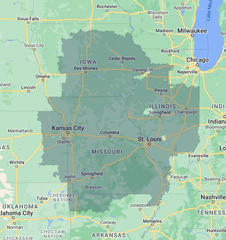
In this guide, we’ll discuss the best slab foundation repair solutions in Iowa, Illinois, and Missouri so you can take the right steps to stabilize and protect your home for years to come.
What Is a Slab Foundation?
A slab, often referred to as a slab-on-grade foundation, is a solid concrete slab usually 4 to 6 inches thick in the center and rests on the ground. The edges are generally thicker, about 24” wide, to allow for extra strength around the perimeter. A slab foundation is suitable for areas with flat ground, fewer freeze-thaw cycles, and high water tables.
Slab foundations are placed on a layer of sand or crushed gravel to improve drainage conditions or to act as a cushion. But before laying the concrete slab, the property has to be graded. If not, the foundation could settle or sink due to poor soil compaction. Some contractors use post-tension beams or steel rods to reinforce the beams. These materials strengthen the concrete and increase its load-bearing capacity.
What are the Pros and Cons of Slab Foundations?
Slab foundations have many advantages and their share of downsides. Some of the most common include:
Benefits
- Less expensive to build
- Relatively easy to build
- Requires less maintenance
- Energy-efficient
- Less risk of mold, mildew, or insect infestations
Disadvantages
- Prone to cracking
- Plumbing inaccessibility
- Often poorly insulated
- No extra storage (in a basement or crawl space)
- Fewer possibilities for design
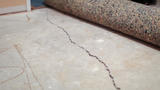
Common Signs of Slab Foundation Problems
If you have a slab foundation, it’s important to watch for signs of damage that could indicate shifting, settling, or structural issues. Over time, changes in soil conditions, temperature fluctuations, and everyday wear and tear can impact the stability of your home.
Here are some common signs that your slab foundation may be experiencing problems:
- Cracks in the slab – Small surface cracks are common, but large or widening cracks may indicate foundation movement.
- Uneven or sunken floors – If certain areas of your floor feel lower or uneven, it could be due to soil shifting or erosion beneath the slab.
- Doors and windows sticking – A settling foundation can cause misalignment, making doors and windows harder to open or close.
- Cracks in walls or ceilings – Vertical, horizontal, or stair-step cracks in drywall or ceilings can signal foundation movement.
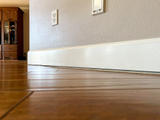
- Gaps between walls and floors – If you notice separation where your floors meet the walls, your foundation may be shifting.
- Plumbing problems – A settling slab can put pressure on underground pipes, leading to leaks, slow drains, or water pressure issues.
If you’re noticing any of these issues, a professional foundation inspection can help determine the best solution to stabilize and protect your home.
What Causes Slab Foundation Damage?
In the Midwest, several factors create challenges for homeowners with slab foundations.
Here are some of the most common causes of slab foundation damage:
- Expansive soil movement – Clay-rich soil swells when wet and shrinks when dry, causing the slab to shift and crack over time.
- Poor drainage – Water pooling around the foundation can weaken the soil beneath the slab, leading to settlement and uneven floors.
- Improper soil compaction – If the ground wasn’t compacted properly during construction, the soil can shift over time, creating voids that cause the slab to sink.
- Plumbing leaks under the slab – Leaking pipes beneath the foundation can erode the soil, leading to cracks and structural instability.
- Tree roots near the home – Roots from large trees can draw moisture from the soil, causing uneven drying and soil shrinkage that leads to slab movement.
Slab foundation damage often starts small but can worsen over time. Addressing these issues early helps protect your home from long-term structural problems.
DIY Slab Foundation Inspection Checklist
Before calling a professional, you can perform a quick slab foundation inspection to spot potential issues early. Here’s what to look for:
- Walk around your home and check for cracks in the slab or exterior walls.
- Look for gaps where your floors meet the walls—separation can indicate foundation movement.
- Test doors and windows to see if they stick, don’t close properly, or appear misaligned.
- Check your floors for uneven areas or sections that feel sunken or raised.
- Inspect outdoor structures like patios and driveways for cracks or separation from the home.
- Watch for plumbing issues, such as slow drains or water leaks, which could signal foundation-related pipe stress.
Best Slab Foundation Repair Solution
Temporary fixes like caulking or patching might improve the appearance of a damaged slab, but they don’t address the underlying cause. The most effective way to restore a sinking or settling slab foundation is with slab piers, a long-term solution that stabilizes and lifts the foundation back into place.
How Slab Piers Repair a Damaged Foundation
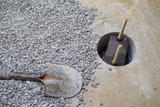
These piers, designed specifically for homes with slab foundations, are installed deep into stable soil beneath the foundation, transferring the home’s weight to stronger soil. This prevents further settlement and, in many cases, can lift the slab back to its original position.
If your slab foundation is showing signs of movement, investing in professional slab pier installation is the best way to ensure a strong, stable home for years to come.
Why Trust Foundation Recovery Systems for Slab Foundation Repair?
At Foundation Recovery Systems, we specialize in slab foundation repair and stabilization for homes across Iowa, Illinois, and Missouri. Our team understands how shifting soil, moisture changes, and settling can impact slab foundations, and we offer customized solutions to restore stability.
Every repair starts with a free foundation inspection, where our experts assess your home’s condition and identify the root cause of the problem. Our team ensures professional installation and backs our work with long-term warranties for added peace of mind.
Don’t wait for the problem to get worse. Schedule a free inspection today!
Slab Foundation FAQs
Slab piers are typically needed when a concrete slab starts to sink or settle due to soil instability, changes in soil moisture, or other underlying issues. Symptoms may include visible cracks in the slab or adjacent walls, uneven floors, or difficulty opening and closing doors and windows.
Yes, slab piers are considered a permanent solution for stabilizing a sinking slab. However, the effectiveness can be influenced by factors like installation quality, so make sure you choose a reputable company with a proven track record.
Our skilled teams generally complete slab pier installations within 1 to 2 days, although the exact time can vary based on the number of piers needed. Reach out for a free inspection and more details about the installation timeline.
Related Resources
Award-Winning Service










- 5/
- 5/
- 5/
- 5/
- 5/

What a fantastic crew. Great communication, hard workers. Michael Williams? Tyler Bennett, and Kanen Carlson got the job done quickly and…
What a fantastic crew. Great communication, hard workers. Michael Williams? Tyler Bennett, and Kanen Carlson got the job done quickly and accurately. Appreciate them keeping me up to speed on the work!
- 5/
- 5/
- 5/
- 5/
- 5/
Brent Claphan came to look at my basement. Gave me great insight with affordable pricing to fix my basement. Shared information about the…
Brent Claphan came to look at my basement. Gave me great insight with affordable pricing to fix my basement. Shared information about the basement and other issues to help me out with a lifetime opportunity for your home. Great information!
- 5/
- 5/
- 5/
- 5/
- 5/
Bryce and AJ were great to work with on our foundation repair. Their communication throughout the process was top notch. We are very…
Bryce and AJ were great to work with on our foundation repair. Their communication throughout the process was top notch. We are very satisfied with the end results and would highly recommend them.
- 5/
- 5/
- 5/
- 5/
- 5/
I am happy to write a favorable review of the work done by Lee, Camryn, and Joshua of Foundation Recovery Systems. The trio worked…
I am happy to write a favorable review of the work done by Lee, Camryn, and Joshua of Foundation Recovery Systems. The trio worked diligently and efficiently to raise and stabilize the foundation of our house. They were on time, they worked hard, and they communicated with me through every step of the process. When they were done, not only was our home level again, but they had cleaned up the jobsite and left me with little to do to put things back in order. I am very pleased with their work and my entire experience with Foundation Recovery Systems.
- 5/
- 5/
- 5/
- 5/
- 5/
I recently had the pleasure of working with Certified Field Inspector Dustin Hodges from Foundation Recovery Systems, and I couldn’t be…
I recently had the pleasure of working with Certified Field Inspector Dustin Hodges from Foundation Recovery Systems, and I couldn’t be more impressed with the experience. From the very beginning, Dustin was prompt, professional, and easy to work with. He took the time to thoroughly inspect my foundation and clearly explain what was going on, breaking everything down in a way that was easy to understand. What really stood out was how he walked me step by step through the repair process—no confusion, no pressure, just honest, straightforward guidance. He didn’t just point out the issues; he explained why my foundation was in its current condition and why addressing it sooner rather than later is so important. That level of transparency and attention to detail gave me a lot of confidence in both his expertise and his integrity. Dustin is the kind of professional you hope to find—knowledgeable, honest, and genuinely committed to helping you make the right decisions for your home. I would absolutely recommend his services to anyone in need of a foundation inspection or repairs.
- 5/
- 5/
- 5/
- 5/
- 5/
Just had work done with Tray and Gage. Friendly and professional, answered any questions we had. Also did a bang up job protecting our…
Just had work done with Tray and Gage. Friendly and professional, answered any questions we had. Also did a bang up job protecting our equipment and cleaning up after the work was done. Would definitely work with them again. Thank you!
- 5/
- 5/
- 5/
- 5/
- 5/
Owen came today concerning my leaky basement windows. He helped as much as he could to stop air and water leakage until I can get these…
Owen came today concerning my leaky basement windows. He helped as much as he could to stop air and water leakage until I can get these windows replaced. Also checked my foundation in a walk around for prevention sake. Thanks Owen for giving me some extra TLC!!!
- 5/
- 5/
- 5/
- 5/
- 5/
I had a WONDERFUL experience with Foundation Recovery Systems! I had just renovated my basement after thinking that I had taken care of any …
I had a WONDERFUL experience with Foundation Recovery Systems! I had just renovated my basement after thinking that I had taken care of any water issues, but after another bout of heavy rain it was clear I had not fixed the issue. Joe was so helpful and kind during our consultation. He was with me every step of the way as I prepared the basement for installation and made me feel so comfortable during the entire process. My foreman Greg and his crew, Andy, co-foreman and installer Cody were so communicative during the entire installation process, sending pictures and took the time to ensure that the rest of my house was taken care of. I truly felt like I was a valued customer and that I was receiving individual attention from each of the employees that I encountered at Foundation Recovery Systems. Their knowledge and expertise in combination with their customer service is unmatched!
- 5/
- 5/
- 5/
- 5/
- 5/
We recently utilized the services of this company to stabilize our foundation with work done inside the basement. The initial contact to…
We recently utilized the services of this company to stabilize our foundation with work done inside the basement. The initial contact to give us an overview of work needed and an estimate of repair was done by Nathan Heidenfelder, who spent a lot of time explaining everything and answering our questions. Our work crew consisted of Travis Clark (crew leader–phenomenal), Brian Eskridge, Justin Geigling, Tyler Davies, and this was a hard-working crew! Tyler called every morning to say they were on there way; they always showed up on time and were professional and courteous. They covered surfaces ahead of time, to minimize all the dust, and cleaned up the works site after the job was finished. It wasn't an expense we had counted on, and it was not a small amount, but as my husband likes to say-'you get what you pay for'. Would not hesitate to recommend this company to anyone needing their services. One company we contacted for an estimate–Woods Basement Services–didn't even return our call…..
- 5/
- 5/
- 5/
- 5/
- 5/
Second time with FRS and incredibly pleased. All 3 of the crew were friendly and knowledgeable.
Second time with FRS and incredibly pleased. All 3 of the crew were friendly and knowledgeable.
- 5/
- 5/
- 5/
- 5/
- 5/
Foundation Recovery did an awesome job on stabilizing 3 sides of my basement, putting in a sump pump and waterproofing under the front…
Foundation Recovery did an awesome job on stabilizing 3 sides of my basement, putting in a sump pump and waterproofing under the front porch. Cole and Lee have been so helpful! The continuing support is great!! I highly recommend!!!
- 5/
- 5/
- 5/
- 5/
- 5/

Cameron Erwin and kalvin Harris worked extremely hard and efficiently. Foreman was always in communication until they were pulling away. …
Cameron Erwin and kalvin Harris worked extremely hard and efficiently. Foreman was always in communication until they were pulling away. Never even took breaks til job was complete.
My overall experience was a great experience with their team! The man that came to give an estimate was thorough and very nice. The men…
My overall experience was a great experience with their team! The man that came to give an estimate was thorough and very nice. The men that came to do the work were nice, thorough, knowledgeable (for the most part), and cleanly for the most part. I liked that they put plastic down from my door all the way to the basement. The only thing I could see, was their having trouble putting my basement window back in, but they did stay until it was back in properly. However, there was a mess where they had to get stuff out of window to get it back in, which I cleaned up after they left. Knowledgeable for most part, because I asked a warranty question and they were unsure because they hadn't done the carbon fiber straps for awhile, but he looked up my answer on the spot. Over all this company and their workers were fabulous!!! I wished i could have had the paperwork in hand instead of via an email because its hard to find where to print it out! They did the job promptly and left. Thanks for all the hard work guys and I would recommend anyone to this company!!
- 5/
- 5/
- 5/
- 5/
- 5/
We were having some water issues in the basement, so we called up Foundation Recovery Systems for help. Scott was our inspector and was…
We were having some water issues in the basement, so we called up Foundation Recovery Systems for help. Scott was our inspector and was extremely helpful. He arrived on time and was very happy to answer all of our questions and was very thorough in explaining everything. All in all, we had a great experience with this Co and would not hesitate to recommend to anyone else.
- 5/
- 5/
- 5/
- 5/
- 5/
They arrived on time, allowed me to explain in full detail my water problems in the basement and gave me an honest answer for the solution….
They arrived on time, allowed me to explain in full detail my water problems in the basement and gave me an honest answer for the solution. They gave me good suggestions on how to solve the problem saving me lots of money.
- 5/
- 5/
- 5/
- 5/
- 5/
We had an excellent experience with Cole, Nate, Brian, and Clayton. From the very beginning when Cole met with us to talk about our options,…
We had an excellent experience with Cole, Nate, Brian, and Clayton. From the very beginning when Cole met with us to talk about our options, he was very friendly, spoke plainly in a way we could understand, and was genuinely looking out for our best interest. I contacted Cole frequently throughout the whole process with questions or concerns, and he would contact me back quickly and was always able to help me. Cole made the project go smoothly from beginning to end. They did great work in our basement. Nate, the foreman, communicated well with us when questions arose and listened to our thoughts and concerns. We would highly recommend Foundation Recovery.
- 5/
- 5/
- 5/
- 5/
- 5/
Trevor Atwell came out for a service visit today and addressed all of my concerns and provided me with peace of mind. He answered every…
Trevor Atwell came out for a service visit today and addressed all of my concerns and provided me with peace of mind. He answered every single question no matter how big or small that I had with great explanations and examples. His wealth of knowledge in the field is evident and I hope to see him for all future service visits.
- 5/
- 5/
- 5/
- 5/
- 5/
Eli shared his foundation knowledge with us and gave us the confidence to move forward with the project. We are thrilled to have the…
Eli shared his foundation knowledge with us and gave us the confidence to move forward with the project. We are thrilled to have the experience, the 5 year warranty, and qualified company, with owner employees. Great business model for the consumer, like us. Thank you, Eli.
- 5/
- 5/
- 5/
- 5/
- 5/
Sam came did an inspection For a driveway did a good job. Give me a decent price and I’m gonna think about it. Probably go with them.👍
Sam came did an inspection For a driveway did a good job. Give me a decent price and I’m gonna think about it. Probably go with them.👍
- 5/
- 5/
- 5/
- 5/
- 5/
Devin Brown and his crew did a spectacular job. The communication and customer service was over the top. Nobody wants to spend money on…
Devin Brown and his crew did a spectacular job. The communication and customer service was over the top. Nobody wants to spend money on foundation, but his team was exceptional and made the experience easier than expected. Thank you again for all your expertise and hard work.

Leah Leitow
Publish Date:
Last Modified Date:
Our Locations
3349 Southgate Ct SW,
Cedar Rapids, IA 52404
(319) 220-5034
14678 E 925 North Rd, Building 5
Bloomington, IL 61705
6300 NW Beaver Dr.
Johnston, IA 50131
(515) 373-8491
7280 NW 87th Terrace, Suite C-210
Kansas City, MO 64153
(816) 774-1539
211 SE State Route 150
Lee's Summit, MO 64082
(816) 774-1539
1872 State Hwy M
Moberly, MO 65270
(660) 202-8662
3020 N. Martin Ave.
Springfield, MO 65803
(417) 612-8286
1625 Larkin Williams rd.
Fenton, MO 63026
(314) 207-9995