
Repairing Large Bumps in Your Concrete Floor
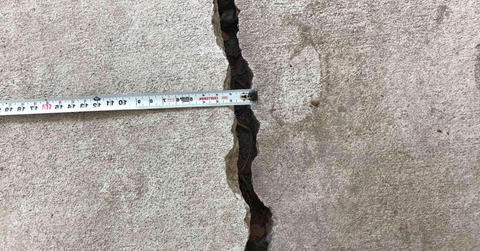
If you’ve noticed that large bumps have appeared on your concrete floor, you’re most likely wondering what is causing them and how to fix this problem.
A bumpy concrete floor is an eyesore and a potential source of problems.
It is a tripping hazard, but it could also indicate much larger problems lurking underneath it. So, how does a concrete floor become bumpy?
Determining the Cause of Large Bumps in Your Concrete Floor
When repairing large bumps in your concrete floor, it’s crucial to determine whether the bump is cosmetic or foundational.
Cosmetic bumps can often be addressed with surface-level solutions, such as grinding down the bump or applying a concrete overlay to level the surface.
However, if the bump is due to foundational issues, it requires a more in-depth approach, potentially involving structural repairs. Properly diagnosing the cause is essential to choose the right method and ensure a lasting repair.
3 Underlying Problems That Cause Concrete Bumps
If your concrete bumps are a result of serious underlying foundation problems, contacting an expert who will inspect your home is a good idea. Here are some of the foundation problems that might be causing the bumps.
1. Upheaval
During a heavy rainstorm, the soil underneath your foundation becomes saturated. The soil particles swell up and push against the concrete slab, leading to large bumps in your floor. Faulty designs are another cause of upheaval.
2. Settling
If your concrete floor has become bumpy because some areas are suddenly lower than others, you might have a problem with a settling foundation. Settling is a process where your home slowly sinks into the ground. Droughts or heavy rains can form gaps in the soil due to which the foundation becomes unstable. Unsupported areas slowly begin to sink into those gaps, causing cracks and uneven floors.
3. Shifting Piers
Is your home supported by piers? If so and you have noticed that your concrete floors are bulging, call the experts at Foundation Recovery Systems and have them examine the foundation. Your old piers may have shifted, so you will need to replace them with new ones.
Repairing the Foundation Problem
Several methods can be used to restore your home. Here are some of the repair methods Foundation Recovery System experts might suggest:
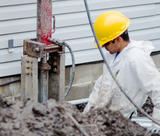
Push Piers
These piers are driven into the ground to support a settling foundation. They are galvanized, so there is no need to worry about corrosion, and they come with a lifetime warranty. Push piers can raise your home back to its original position and level your floors.
Helical Piers
If your lighter structure has bumps, helical piers will solve the problem. They also come with a long-term warranty and will permanently stabilize a settling foundation.
Slab Piers
Slab piers are specifically designed for the slab foundation. They are invisible once installed and have a long-term warranty.
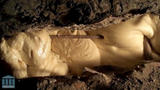
Concrete Lifting System
Uneven concrete floors can be repaired with a PolyRenewal™ concrete lifting system. This lightweight yet durable foam stabilizes both your problematic concrete and the underlying soil for lasting protection and an accurate lift.
Trust Foundation Recovery Systems for Your Concrete Floor Repair Needs
When it comes to repairing large bumps in your concrete floor, you don’t have to worry about determining the cause on your own.
Foundation Recovery Systems can help. With over 30 years of experience, you can trust us to provide reliable and effective solutions for your concrete floor issues.
Let us ensure your floor is safe and smooth again. Contact us today for a comprehensive and free inspection and professional repair services.
FAQs
Most concrete leveling projects around pool decks can be completed in just a few hours, and each area is ready for use just 20 minutes after repair.
The process starts with drilling small holes into the affected concrete slab. Then, a leveling compound, polyurethane foam, is injected under the slab. As the foam expands, it fills the voids and raises the slab to its correct level. The holes are then sealed, leaving the surface ready for use almost immediately.
Yes, concrete leveling is considered environmentally friendly because it uses less material than concrete replacement and extends the life of the existing concrete, thereby reducing waste. The material used is also non-toxic to the environment.

Leah Leitow
Related Resources


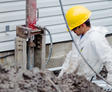
Disclaimer: “Concrete leveling” means the process by which cracked, uneven concrete is stabilized, and in many cases lifted, by means of PolyRenewal™ polyurethane foam. Foundation Recovery Systems does not guarantee that PolyRenewal™ can make your concrete perfectly level.
Publish Date:
Last Modified Date:
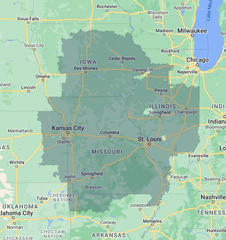
Our Locations
3349 Southgate Ct SW,
Cedar Rapids, IA 52404
(319) 220-5034
14678 E 925 North Rd, Building 5
Bloomington, IL 61705
6300 NW Beaver Dr.
Johnston, IA 50131
(515) 373-8491
7280 NW 87th Terrace, Suite C-210
Kansas City, MO 64153
(816) 774-1539
211 SE State Route 150
Lee's Summit, MO 64082
(816) 774-1539
1872 State Hwy M
Moberly, MO 65270
(660) 202-8662
3020 N. Martin Ave.
Springfield, MO 65803
(417) 612-8286
1625 Larkin Williams rd.
Fenton, MO 63026
(314) 207-9995