
Should I Buy a Dehumidifier After My Basement Floods?
Flooding is a homeowner’s worst nightmare. The floodwater that collects in your basement can ruin your belongings and foster many problems.
While a dehumidifier does a great job drying up your basement after flooding, it does not address the root problem—the flooding itself.
But before deciding if a dehumidifier is right for your basement, it is a good idea to understand how they work and what purpose they serve.
What Is a Dehumidifier?
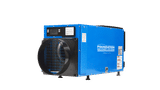
A dehumidifier works by removing excess moisture from the air to maintain a comfortable and healthy humidity level in your home.
Here’s how it operates:
- Intake: The dehumidifier draws in humid air through a fan.
- Cooling Coil: The air passes over a refrigerated coil, causing the moisture in the air to condense into water droplets.
- Collection: The condensed water is collected in a reservoir or drained out through a hose.
- Reheated Air: The now dry air is reheated to a comfortable temperature and released back into the room.
- Continuous Cycle: This process continues until the desired humidity level is reached, helping to reduce mold, mildew, and allergens.
A dehumidifier works to:

- Eliminate Common Allergy Triggers: A dark, humid environment like the basement provides the perfect breeding ground for allergens like mold, mildew, and dust mites.
- Improve Air Quality: Your dehumidifier reduces the humidity level in your basement and cleans and filters the air, making the air more habitable for you and your loved ones.
- Protect Your Home: Excessive moisture can cause wood frames and beams to warp or crack. A dehumidifier dries the air to reduce these problems.
- Reduce Energy Consumption: When the humidity increases, the HVAC system has to work harder to keep you dry and comfortable. A dehumidifier lightens the load on your HVAC, extending its life span and reducing monthly energy costs.
Can A Dehumidifier Keep Water Out Of My Basement?
Unfortunately, even the most powerful dehumidifier will not prevent your basement from flooding. A dehumidifier only works to reduce moisture in the air.
Without proper waterproofing, water will find a way to get into your basement. Consider the following when waterproofing the basement:
- Grading Your Yard: The slope of your yard contributes significantly to your basement flooding issues. Depending on your specific landscaping issues, you will need to regrade it or install an interior drainage system.
- Add Interior Drainage: An interior drainage system is specially designed to sit atop the footing along the basement’s perimeter and collect water from the walls and floor.
- Installing a Sump Pump: The sump pump removes any water collected by the interior drainage system by pumping it out of your basement and away from your home through discharge pipes.
- Sealing Your Windows: Check windows for warped sills that might be allowing moisture to seep through. If this is the case, consider repairing or replacing the windows.
- Sealing Cracks: Regularly inspect your foundation walls for cracks and have them sealed by a professional waterproofing contractor. Depending on the severity of the cracks, other foundation repair methods may need to be used.
- Maintaining Your Gutters and Downspouts: Ideally, you want your gutters cleaned at least twice a year, once in spring and once in autumn. Also, make sure your gutters and downspouts correctly align and that the downspouts are angled down and away from your foundation.
Ensure Long-Term Basement Dryness

While purchasing a dehumidifier after a basement flood can be a helpful step in drying out moisture and preventing mold growth, it will not address the underlying issue of your basement getting wet again in the future.
Contact Foundation Recovery Systems for long-term solutions to keep your basement dry and your life worry-free. Our experts can provide strategies to ensure your basement remains protected from future water damage.
Schedule a free inspection with us today and take the first step toward a permanently dry and secure basement.
FAQs
While they can provide temporary relief, standard dehumidifiers are not sufficient for expansive spaces like basements. We offer more robust, energy-efficient alternatives.
Choosing a dehumidifier is not as easy as it sounds. You must make sure you are getting the right model for your property. This means considering a range of factors including the size of your basement and the local climate.
If you are waterproofing your basement for the first time or updating an older dehumidifier, you should definitely consider an energy-efficient model. The benefits of choosing an energy-efficient model are many, but lower energy bills and a better indoor climate are among them.

Leah Leitow
Publish Date:
Last Modified Date:
Our Locations
3349 Southgate Ct SW,
Cedar Rapids, IA 52404
(319) 220-5034
14678 E 925 North Rd, Building 5
Bloomington, IL 61705
6300 NW Beaver Dr.
Johnston, IA 50131
(515) 373-8491
7280 NW 87th Terrace, Suite C-210
Kansas City, MO 64153
(816) 774-1539
211 SE State Route 150
Lee's Summit, MO 64082
(816) 774-1539
1872 State Hwy M
Moberly, MO 65270
(660) 202-8662
3020 N. Martin Ave.
Springfield, MO 65803
(417) 612-8286
1625 Larkin Williams rd.
Fenton, MO 63026
(314) 207-9995