
Why Should I Worry About Cracked Bricks?
Cracked brickwork is an unsightly problem, but there are other issues to worry about. After all, it is a sign that your walls are under immense pressure from somewhere!
- Dampness
Any cracks in your walls will let water into your home and lead to issues with humidity and dampness within your property. This increase in the level of humidity in your home can cause many co-occurring issues, such as mold formation and rot in exposed wooden beams and joists. These issues, in turn, lead to further problems.
Rotting wooden support joists, for example, will quickly cause floors to sag as the level of support they receive slowly drops. Mold formation, too, will lead to other issues like musty smells, pest infestations, and even health problems for you and anyone else in the house. If you have respiratory problems (for example, asthma) certain kinds of mold can be very dangerous.
- Bowing or Leaning Walls
Cracks can be a sign of walls that are beginning to bow, but they can also make walls more susceptible to bowing and leaning. As such, these two issues tend to form a vicious cycle when they appear in tandem; walls that are bowing cause cracks to spread and cracks weaken the wall further, making it easier for the process of bowing to accelerate.
As walls begin to bow, lean, or otherwise deviate from their intended placement, they can have a huge impact on your property as a whole. Severely bowed walls, for example, will not offer support to surfaces above them. As a result, you may notice that floors in your home begin to sag or even break away from the walls adjacent to them.
- Uneven Floors
Whether the cracks in your brickwork are a symptom or cause of instability, they are often tied indelibly to bigger issues like uneven or sagging floors and gaps between walls, floors, and ceilings within a property. While these issues can be caused by bowing walls, as described above, they can also stem from foundational instabilities and problems.
A foundation that is being affected by subsidence or settlement, for example, can lead to cracked bricks and uneven flooring. How a floor is affected can even help in the diagnosis of foundation issues. For example, a property that is sinking overall is more likely to see an even or consistent tilt, whereas a property with settlement issues is more likely to see irregular dips in its flooring.
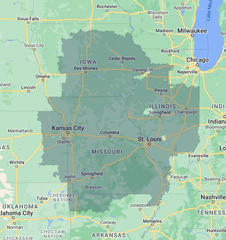
Our Locations
3349 Southgate Ct SW,
Cedar Rapids, IA 52404
(319) 220-5034
14678 E 925 North Rd, Building 5
Bloomington, IL 61705
2401 SE Creekview Dr.
Ankeny, IA 50021
(515) 373-8491
7280 NW 87th Terrace, Suite C-210
Kansas City, MO 64153
(816) 774-1539
211 SE State Route 150
Lee's Summit, MO 64082
(816) 774-1539
1872 State Hwy M
Moberly, MO 65270
(660) 202-8662
3020 N. Martin Ave.
Springfield, MO 65803
(417) 612-8286
1625 Larkin Williams rd.
Fenton, MO 63026
(314) 207-9995