
Why Is My Pool Deck Sinking?
There’s no single force that works against the structural integrity of your pool deck. There are forces that can cause more damage than others. Whether these forces work independently or collaborate to destabilize your pool deck, you can work with an area professional to identify them and address them accordingly.
The Work of Hydrostatic Pressure
Hydrostatic pressure is a force that plagues even the sturdiest of homes. Hydrostatic pressure is, in simple terms, the weight of water pressing against something. You’re experiencing hydrostatic pressure from the inside of your pool deck, as you likely have hundreds of gallons of water in your pool. The stress it forces on your concrete originates on a molecular level, making it difficult to get ahead of if you don’t have the proper tools. If you let it sit outside—or even inside—of your pool deck for too long, it can be one of the prominent forces that cause your concrete to start sinking.
Hydrostatic pressure also changes the temperature of your concrete on a molecular level. As your concrete grows colder in response to the presence of moisture, it will shrink. As temperatures warm, it will expand. That stress, should the changes take place at a rapid pace, destabilizes your concrete pool deck and can lead to the cracks that will force your deck to sink. The good news is that professionals can walk you through the waterproofing means you can use to limit the amount of hydrostatic pressure your pool deck comes into contact with, like proper lawn grading and drainage systems.
Concrete’s Sensitivity
It’s true that concrete has a lot of strength in some situations, but in other situations, it can actually be quite sensitive. Despite its reputation, concrete is a relatively sensitive material to use around your home due to the variety of issues it has to put up with. Its structural integrity can be put into question by a litany of forces, including but not limited to:
- Tree roots
- Pests and infestations under your pool deck
- Poor laying at the time of construction
- Mistreatment of the concrete at the time of construction
- The mineral composition of your soil
That means you shouldn’t assume that your concrete is fine just because it’s “such a strong material.” If you’re having a difficult time figuring out why your concrete pool deck has started showing signs of strains, know that you don’t have to solve the mystery on your own. Get in touch with the professional contractors serving Kansas City, Moberly, St. Louis, and Springfield, MO, instead.
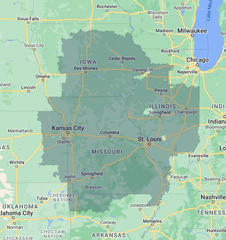
Our Locations
3349 Southgate Ct SW,
Cedar Rapids, IA 52404
(319) 220-5034
14678 E 925 North Rd, Building 5
Bloomington, IL 61705
2401 SE Creekview Dr.
Ankeny, IA 50021
(515) 373-8491
7280 NW 87th Terrace, Suite C-210
Kansas City, MO 64153
(816) 774-1539
211 SE State Route 150
Lee's Summit, MO 64082
(816) 774-1539
1872 State Hwy M
Moberly, MO 65270
(660) 202-8662
3020 N. Martin Ave.
Springfield, MO 65803
(417) 612-8286
1625 Larkin Williams rd.
Fenton, MO 63026
(314) 207-9995