
Why Is My Crawl Space Damp?
Have you noticed signs of dampness and humidity in your crawl space? If so, then it is time to consider your repair options. The source of moisture could either be internal or external. What that really means is that the issues in your home either will be found in your plumbing system and appliances or within the structure of your property.
Internal Leaks
Leaks in your property’s appliances and plumbing system are unique in that they are far more likely to cause substantial water damage and build-up in a home, but when they are caught quickly, they tend to be easier to fix and less likely to cause serious structural damage. This means that in the grand scheme of things, finding out that a plumbing or appliance leak is the main cause of dampness and humidity can be somewhat of a relief for homeowners. There are two exceptions to this, however.
A full-scale plumbing flood is far more likely to cause serious structural issues than any other form of internal leak as a result of the amount of water it releases and the pressure at which the water exits the system. Low-level leaks that take place over a prolonged period of time are far more likely to lead to serious issues like wood rot because they will have time to seriously increase humidity and facilitate the growth and spread of fungal issues. The most common internal leaks occur in the joints between pipes or the meeting point between pipes and appliances or faucets.
Structural Damage
If there are no signs of internal leaks and plumbing damage in your home and the amount of water is small and persistent, then it is far more likely that it is entering your property from outside through areas of structural damage. The most common forms of damage that can lead to dampness and humidity in a crawl space are foundation damage, cracking, or fragmentation. Any cracks in your property’s structure will let water in, but cracks that are situated below ground level represent a particularly strong risk of allowing water to seep in.
There also are structural factors that cannot be classed as damage, however. Seepage, for example, is a process that occurs because of the porous nature of concrete as a building material. When a home has unsealed concrete surfaces at or below ground level, seepage can produce significant moisture. In an area like St. Louis, MO, where the climate is humid and the soil is heavily clay-based, this process is exacerbated further. Secondly, there is the matter of crawl space vents–these features are outdated, but there are still homes that have uncovered vents. If your home has exposed vents, then this could be the source of your dampness and high relative humidity.
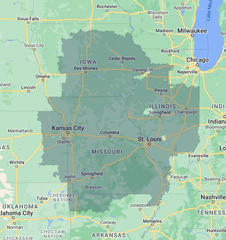
Our Locations
3349 Southgate Ct SW,
Cedar Rapids, IA 52404
(319) 220-5034
14678 E 925 North Rd, Building 5
Bloomington, IL 61705
2401 SE Creekview Dr.
Ankeny, IA 50021
(515) 373-8491
7280 NW 87th Terrace, Suite C-210
Kansas City, MO 64153
(816) 774-1539
211 SE State Route 150
Lee's Summit, MO 64082
(816) 774-1539
1872 State Hwy M
Moberly, MO 65270
(660) 202-8662
3020 N. Martin Ave.
Springfield, MO 65803
(417) 612-8286
1625 Larkin Williams rd.
Fenton, MO 63026
(314) 207-9995