
Why Does My Home Have Cracked Bricks?
If you notice cracked bricks or masonry in your home, there are many potential causes. From shifts in the soil under your foundation to tree root invasion and excess hydrostatic pressure, your foundation and walls deal with a lot. The most likely causes of cracked bricks are:
- Hydrostatic Pressure
Hydrostatic pressure is common to all properties; no matter where you live, your home will have to deal with a certain level of hydrostatic pressure. This pressure against your basement walls, however, can cause them to lean, bow, and crack if it becomes too great. If you have brick walls, cracks are likely to start in the mortar between the bricks, but very strong pressure can cause the bricks themselves to crack, too.
Excessive hydrostatic pressure is generally caused by issues within the soil itself. Poorly compacted backfill soil, for example, is vulnerable to saturation during heavy rainfall while expansive soils like clay and peat are naturally more absorbent, causing them to swell when wet. In both cases, however, the weight of the water in the soil is the cause of the most serious pressure on a property’s walls.
- Excessive Soil Saturation or Dehydration
The soil under a property’s foundation is key to its overall health. If the earth is too wet, it can quickly lose its ability to support a structure; if it is too dry, it can shrink and leave areas of a foundation without support. In either case, this can put disproportionate pressure on particular parts of a home. As a result, walls may begin to crack and bow.
While strong hydrostatic pressure caused by soil saturation forces walls to lean and bow as a result of lateral pressure, excessively dry soil will generally shrink. This retreat leaves sections of a property’s foundation un-supported and can result in settlement, whereby sections of the foundation sink into the void left behind. This puts extra strain on your property’s structure and can lead to cracking bricks.
- Tree Root Invasion
Tree root invasion can be incredibly damaging to a property in several ways, but they are most likely to cause problems for your foundation and sewage lines (which often crack under the strain of invading tree roots). Of course, your basement walls are also in danger from spreading roots because of their subterranean positioning. If you have a particularly large tree near your home, the roots could break through the walls entirely when spreading cracks are ignored.
The signs of tree root invasion can be hard to spot if you do not know what you are looking for. That is unless the roots themselves begin to show through walls and flooring. Of course, it is far better to catch this issue before it becomes so pressing. Look for unexpected bulges in your driveway or paving slabs. These are generally the first signs of tree root incursion.
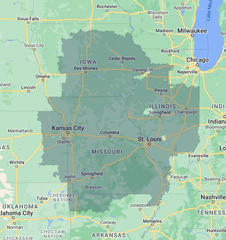
Our Locations
3349 Southgate Ct SW,
Cedar Rapids, IA 52404
(319) 220-5034
14678 E 925 North Rd, Building 5
Bloomington, IL 61705
2401 SE Creekview Dr.
Ankeny, IA 50021
(515) 373-8491
7280 NW 87th Terrace, Suite C-210
Kansas City, MO 64153
(816) 774-1539
211 SE State Route 150
Lee's Summit, MO 64082
(816) 774-1539
1872 State Hwy M
Moberly, MO 65270
(660) 202-8662
3020 N. Martin Ave.
Springfield, MO 65803
(417) 612-8286
1625 Larkin Williams rd.
Fenton, MO 63026
(314) 207-9995