
Why Does Concrete Fail?
The concrete structures around your home can prove to be especially sensitive to water damage. That means that you’re not just watching out for the structural integrity of your foundation when the rain and snow start to come down. You’ll also want to keep an eye on your patio, walkway, driveway, and concrete steps.
These structures are just as vulnerable to cracks as the rest of your home, if not more so. While your foundation has a layer of dirt around it to generally cushion it from hydrostatic pressure and similar forces, most of the aforementioned structures come into direct contact with sitting water or moisture. If you’re not keeping a close eye on them, they may begin to slip or otherwise show signs of damage before you’ve noticed that something’s amiss. Slipping or cracked concrete structures are more than just inconvenient—they actively devalue your home and put your family at risk for accidents.
The good news is that you can not only repair the damage done to the concrete structures around your home but you can also waterproof them to prevent that kind of damage from appearing in the first place. The professional contractors in your area can inspect your concrete slabs on a regular basis or after signs of damage appear to better help you understand what kind of problems to watch for and how best you can go about repairing any structural lapses that may have already set in.
The concrete around your home can fail for a myriad of reasons. Some of the most common include:
Hydrostatic Pressure
More often than not, high levels of humidity and heavy rain can cause the concrete slabs around your home to slip. Homes on lower grades or that aren’t appropriately waterproofed, for example, can see their porches start to sink into the ground as those porches crack from the stress hydrostatic pressure puts them under.
More specifically, hydrostatic pressure, using humidity and heavy rain as its mediums, can cause the cement around your home to change size on a molecular level. As your concrete expands and contracts, it can push up against the borders of your home, engaging in what is known as concrete crawl. Those same structures can develop stress cracks over time as they try to compensate for their many changes in size and shape. Water, in turn, can make its way into those cracks and increase the amount of hydrostatic pressure that your structures have to contend with. In this way, hydrostatic pressure tends to beget itself, making it all the more difficult for you to repair the damage that’s popped up around your home.
Other Causes of Concrete Failure
That said, animals and tree roots can also do significant damage to the concrete structures you have around your home. If, for example, you have trees with invasive root systems planted within 20 feet of a concrete structure, the soil beneath your structures can shift unevenly, causing your structures to sink. Burrowing animals can leave behind similar gaps.
You’ll never know which of these forces is causing problems for your property, though, if you don’t know what signs of damage to look for. If you think something may be going amiss out in your yard, you’ll want to keep an eye out for:
- Unusual animal behavior around your property
- Gaps in the foundation line near your home
- Pooling water or unusually damp soil near your porch, patio, driveway, or other concrete structures
It is in your best interest to try and figure out why the concrete structures around your home may be failing. With that in mind, if you’re not able to identify any immediate causes, you can reach out to area professionals to schedule a property inspection.
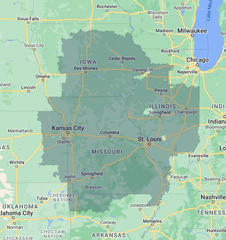
Our Locations
3349 Southgate Ct SW,
Cedar Rapids, IA 52404
(319) 220-5034
14678 E 925 North Rd, Building 5
Bloomington, IL 61705
2401 SE Creekview Dr.
Ankeny, IA 50021
(515) 373-8491
7280 NW 87th Terrace, Suite C-210
Kansas City, MO 64153
(816) 774-1539
211 SE State Route 150
Lee's Summit, MO 64082
(816) 774-1539
1872 State Hwy M
Moberly, MO 65270
(660) 202-8662
3020 N. Martin Ave.
Springfield, MO 65803
(417) 612-8286
1625 Larkin Williams rd.
Fenton, MO 63026
(314) 207-9995