
What Makes Concrete Uneven?
There is no single force that can be blamed for the failure of concrete around your property. There are, however, certain players that have more of an impact on concrete’s overall structural integrity than others. These include:
Hydrostatic Pressure
When in doubt, you can look to high levels of humidity, heavy rain, and hydrostatic pressure when your patio or driveway begins to heave. This kind of pressure, brought against your concrete thanks to the buildup of water in and around your lawn, can change the size of concrete on a molecular level. Not only that, but concrete is a surprisingly porous material. It can absorb sitting water and retain it for an extended period of time, adding to the hydrostatic pressure it’s already facing.
As that hydrostatic pressure builds and your concrete begins to change sizes, your compromised structures can develop stress cracks. If the temperature starts to drop outside of your home, then the water that your concrete absorbed can even freeze, causing those aforementioned cracks to expand at a rapid rate. Not only will you have to contend with cracks, but you may also find yourself facing sinkage and concrete crawl that causes your concrete to appear uneven. In short, water’s work against your home is varied, but all of it poses an immediate threat to the appeal and safety of your property.
Other Forces
Of course, it isn’t just hydrostatic pressure, standing water, and moisture that can destabilize and de-level the concrete structures around your property. Animals and tree roots can also do significant damage to those same structures. For example, trees that have been planted too close to your home can spread their roots out and underneath the concrete structures you’ve poured. In turn, those roots can leave gaps in the soil behind them as they grow. Your concrete can then sink into those gaps, causing it to buckle on the surface.
Animals, too, like to dig burrows beneath the structures that they think will keep them safe in the long run. Rabbits, for example, and groundhogs can leave behind burrows that are up to 45 feet long. Your concrete structures can sink into those burrows, buckling as they go down. With those different sources of damage in mind, you’ll want to try and determine why it is that the concrete structures around your home have succumbed to damage. The sooner you’re able to identify a cause behind your slippage, the more effectively you’ll be able to act when investing in repairs and future preventative measures.
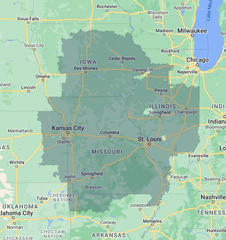
Our Locations
3349 Southgate Ct SW,
Cedar Rapids, IA 52404
(319) 220-5034
14678 E 925 North Rd, Building 5
Bloomington, IL 61705
2401 SE Creekview Dr.
Ankeny, IA 50021
(515) 373-8491
7280 NW 87th Terrace, Suite C-210
Kansas City, MO 64153
(816) 774-1539
211 SE State Route 150
Lee's Summit, MO 64082
(816) 774-1539
1872 State Hwy M
Moberly, MO 65270
(660) 202-8662
3020 N. Martin Ave.
Springfield, MO 65803
(417) 612-8286
1625 Larkin Williams rd.
Fenton, MO 63026
(314) 207-9995