
Why is an Interior Drainage System Best?
Of all of your basement waterproofing options, interior drainage systems can provide your home with the most comprehensive protection.
The Basic Benefits
As mentioned, interior drainage systems are ideal if you’ve found yourself contending with superficial but widespread flooding. In these cases, your drainage system can consistently help you keep your home dry. This waterproofing measure is also non-invasive, meaning it won’t impact the appearance of your basement upon installation.
Beyond that, an interior drainage system can be relatively straightforward to install. While contractors may still need to fuss with your foundation, depending on whether or not your home’s seen any damage and to better direct water away from your home, installations can take between one and three days. Experienced professionals make this time pass quickly. You can even request that additional waterproofing measures, as mentioned above, be installed alongside your drain within that same time frame. This way, you can better protect your home from unanticipated forms of water damage.
Overcoming Common Waterproofing Problems with an Interior Drainage System
More specifically, interior drainage systems can help you contend with the smaller inconveniences that leaks can bring about in your home. Consider, after all, what moisture can do to your space. Unusually high levels of humidity and standing water alike can make your home more vulnerable to the stack effect while also damaging not only your structural supports but any belongings you have stored away.
Other common problems an interior basement drain can help you contend with include:
- Unpleasant Smells. While dealing with unpleasant smells in your home may not seem like that significant of a trial, those smells can often indicate something else is wrong with your basement. As moisture makes its way into your basement, it can seep not only into the furniture you have in place but also into your insulation and drywall. In turn, these materials can take on unwanted damage, to the point where they may start to rot. The smells that make their way through your home, then, can indicate significant property damage. If you opt to cover these smells up with an air freshener or something similar, you may be obscuring a significantly larger problem.
- Standing Water or Seepage. If you walk downstairs to find standing water or seepage up against one of your walls, you’ve got the clearest idea of both where the damage in your basement might be and how severe it may be. Seepage, of course, is less significant than flooding, but both conditions indicate that your basement’s structural supports may be compromised. Dealing with seepage and flooding can be complicated, especially if you weren’t expecting to see that degree of damage upon coming into your home. The first thing you’ll want to do is to try and bail out your home before the water can start to negatively impact the property you have stored away in your basement. As soon as it looks like the water is clear, you’ll want to reach out to area professionals to discuss what kind of repairs your basement may need.
- Infestations. As cracks start to appear in your basement’s structural supports, it becomes more and more likely that animals and insects will start to make their way into your home. While summer weather can keep most critters outdoors, insects will take any advantage they can to settle inside of your home. Winter weather will drive critters like rabbits, moles, and raccoons toward the comfort of your home.
- Mold. That same moisture that can cause your property to rot can also provide mold with the exact conditions it needs to thrive. Mold loves little more than darkness, moisture, and heat. If your basement cracks a leak, you’ll be more likely to see mold start popping up in spots close to the leak itself. The molds that tend to crop up in your home can be especially dangerous both for your home’s structural integrity and for the health of your family. Molds that are allowed to flourish can cause your family to develop allergies or lifelong health conditions. While it can be tempting, with that in mind, to try and remove any spotted mold clusters from your basement as soon as you spot them. Unfortunately, trying to get this kind of mold out of your home without professional guidance can put you in immediate danger. At the absolute minimum, you’ll want to have protective materials on hand, including gloves and a mask, as you go to drive mold from your home. Ideally, if you spot a mold growth in your home, you’ll want to reach out to a mold remediation professional and schedule a home inspection and removal.
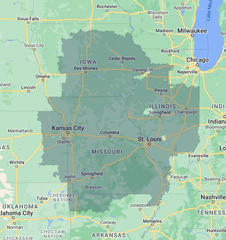
Our Locations
3349 Southgate Ct SW,
Cedar Rapids, IA 52404
(319) 220-5034
14678 E 925 North Rd, Building 5
Bloomington, IL 61705
2401 SE Creekview Dr.
Ankeny, IA 50021
(515) 373-8491
7280 NW 87th Terrace, Suite C-210
Kansas City, MO 64153
(816) 774-1539
211 SE State Route 150
Lee's Summit, MO 64082
(816) 774-1539
1872 State Hwy M
Moberly, MO 65270
(660) 202-8662
3020 N. Martin Ave.
Springfield, MO 65803
(417) 612-8286
1625 Larkin Williams rd.
Fenton, MO 63026
(314) 207-9995