
Your Guide to Relative Humidity
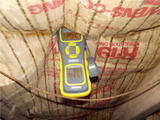
In a previous article, we tackled the question, “How to Dry Out a Crawl Space and Manage Humidity Levels?“
Now, we’re going to take a step back and answer, “What is relative humidity?”
The answer is straightforward, so let’s dive right in.
What Is Relative Humidity?
Relative humidity measures the amount of moisture in the air compared to the maximum amount the air can hold at a given temperature.
It’s expressed as a percentage; for example, if the relative humidity is 50%, the air is holding half of the moisture it can at that temperature. Warmer air can hold more moisture than cooler air, so relative humidity changes with temperature fluctuations. Understanding relative humidity is important because high levels can lead to problems like mold growth, condensation, and wood rot, especially in areas like basements and crawl spaces.
How to Measure Relative Humidity and Protect Your Home
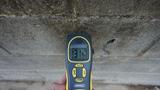
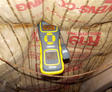
Measuring relative humidity in your home is easy with a hygrometer, a small device that reads the moisture level in the air. Hygrometers are inexpensive and can be placed in areas like basements, crawl spaces, or living rooms to monitor humidity levels.
High humidity can negatively affect your home by promoting mold and mildew growth, damaging walls, ceilings, and floors, and posing health risks.
Excess moisture can also cause wood to warp or rot, damage insulation, and create an environment that attracts pests like termites. Keeping an eye on relative humidity helps you take action before these issues escalate.
Understanding Relative Humidity & Its Impact on Your Home
In this post, we answered the question, “What is relative humidity?” We explained that relative humidity measures the moisture in the air compared to its maximum capacity at a given temperature. High humidity can lead to problems like mold, mildew, wood rot, and pest infestations, so keeping an eye on humidity levels is crucial for maintaining a healthy home.
There’s much more to learn about humidity’s impact on your home. In our next article, we’ll dive into the differences between wood rot and mold.
If you need basement or crawl space waterproofing, Foundation Recovery Systems offers a quick, easy, and completely FREE inspection—just click the button below to get started!
FAQs
The cost varies based on the size and condition of your crawl space, as well as necessary repairs. Foundation Recovery Systems offers free inspections, no-obligation quotes, and financing options to accommodate your budget.
Keeping humidity levels within 40-60% is crucial to prevent mold growth. For expert guidance on maintaining such levels, reach out to Foundation Recovery Systems.
A humidity range of 40 to 50 percent is optimal. Lower levels can cause uncomfortable dry air, while higher levels promote mold growth and other moisture issues. A professionally installed crawl space dehumidifier, combined with waterproofing and encapsulation methods, is essential. Contact Foundation Recovery Systems for a free inspection and estimate.
Related Resources
Award-Winning Service










- 5/
- 5/
- 5/
- 5/
- 5/

Tyler, Marland and Martin were amazing! They called every morning to give me their time of arrival. They were friendly, helpful and…
Tyler, Marland and Martin were amazing! They called every morning to give me their time of arrival. They were friendly, helpful and knowledgeable. They worked hard and finished earlier than predicted. The work is excellent! I would highly recommend this company and this team of guys.
- 5/
- 5/
- 5/
- 5/
- 5/
I am happy to write a favorable review of the work done by Lee, Camryn, and Joshua of Foundation Recovery Systems. The trio worked…
I am happy to write a favorable review of the work done by Lee, Camryn, and Joshua of Foundation Recovery Systems. The trio worked diligently and efficiently to raise and stabilize the foundation of our house. They were on time, they worked hard, and they communicated with me through every step of the process. When they were done, not only was our home level again, but they had cleaned up the jobsite and left me with little to do to put things back in order. I am very pleased with their work and my entire experience with Foundation Recovery Systems.
- 5/
- 5/
- 5/
- 5/
- 5/
Josh, Dalton, and Davis did a good job. They were respectful and thoughtful and fully explained what was done. We highly recommend them and …
Josh, Dalton, and Davis did a good job. They were respectful and thoughtful and fully explained what was done. We highly recommend them and FRS.
- 5/
- 5/
- 5/
- 5/
- 5/
The boys at FRS did a great job. Worked late and got the job done in the schedule in which was given. Cameron Erwin, Kalvin Harris and Niko …
The boys at FRS did a great job. Worked late and got the job done in the schedule in which was given. Cameron Erwin, Kalvin Harris and Niko Basham did great. Thanks for you hard work and professionalism and communication.
- 5/
- 5/
- 5/
- 5/
- 5/
Zach sanders Kudos about Zach! He was very thorough and explained everything perfectly! A great advocate for your company!
Zach sanders Kudos about Zach! He was very thorough and explained everything perfectly! A great advocate for your company!
- 5/
- 5/
- 5/
- 5/
- 5/
Thanks to Doug Helfrich for his professionalism and knowledge for inspecting my basement. A five star job for sure.
Thanks to Doug Helfrich for his professionalism and knowledge for inspecting my basement. A five star job for sure.
- 5/
- 5/
- 5/
- 5/
- 5/
Avery G, Chris M, and Gage M did a great job working on my basement installing 6 Intella jacks and stabilizing my main beam.
Avery G, Chris M, and Gage M did a great job working on my basement installing 6 Intella jacks and stabilizing my main beam.
- 5/
- 5/
- 5/
- 5/
- 5/
So impressed with this team of young men from sales to installation. Professional, hard working, completely prepared to finish our sump…
So impressed with this team of young men from sales to installation. Professional, hard working, completely prepared to finish our sump pump install! Thank you Travis Clark, Brian Eskrige and Jeremy Raby.
- 5/
- 5/
- 5/
- 5/
- 5/
Brandon and his crew are incredible! The communication throughout the process was impeccable. He clearly explained the process, how to fix…
Brandon and his crew are incredible! The communication throughout the process was impeccable. He clearly explained the process, how to fix the challenges we encountered and took the time to educate us on anything and everything we asked about. Couldn’t have asked for a better group of guys!
- 5/
- 5/
- 5/
- 5/
- 5/
I cannot recommend this company enough! I’m more than happy with their service. From Jason’s approach when giving a quote to Trent and…
I cannot recommend this company enough! I’m more than happy with their service. From Jason’s approach when giving a quote to Trent and Trey’s exceptional work day of, this is who you should trust!
- 5/
- 5/
- 5/
- 5/
- 5/
Kevin Macdonald was my inspector and Tyler Sprague along with his crew for my crawlspace wood-work and encapsulation project. Every one did …
Kevin Macdonald was my inspector and Tyler Sprague along with his crew for my crawlspace wood-work and encapsulation project. Every one did a very good job .I was very happy with the good job .
- 5/
- 5/
- 5/
- 5/
- 5/
I want to thank the 3 person that work on my basement today Ayden did an excellent job took time to come back fix my basement thank you all …
I want to thank the 3 person that work on my basement today Ayden did an excellent job took time to come back fix my basement thank you all for coming to fix it! I want to thank Ayden Land, Josh Howard,and Derrick Bushnell! Great crew thanks so much!
- 5/
- 5/
- 5/
- 5/
- 5/
Bradley Cooper did a great job showing me what's was wrong.
Bradley Cooper did a great job showing me what's was wrong.
- 5/
- 5/
- 5/
- 5/
- 5/
Trevor Atwell was at my home today and provided excellent service reviewing any possible repairs that were needed. I appreciate the…
Trevor Atwell was at my home today and provided excellent service reviewing any possible repairs that were needed. I appreciate the service.
- 5/
- 5/
- 5/
- 5/
- 5/
Corey was professional and personable. He was knowledgeable and explained everything thing very well.
Corey was professional and personable. He was knowledgeable and explained everything thing very well.
- 5/
- 5/
- 5/
- 5/
- 5/
We are very pleased with our crawl space encapsulation. We signed contract on a Thursday night and they started & finished the job on the…
We are very pleased with our crawl space encapsulation. We signed contract on a Thursday night and they started & finished the job on the following Tuesday in 4 hours. Our humidity level went from 77% to 52%. It’s looks so good under there. I highly recommend.
- 5/
- 5/
- 5/
- 5/
- 5/
Jared showed up exactly on time for his appointment this afternoon. He was professionally dressed with a Foundation Recovery Systems golf…
Jared showed up exactly on time for his appointment this afternoon. He was professionally dressed with a Foundation Recovery Systems golf shirt and he was friendly and easy to talk with. After a thorough inspection he offered his analysis and findings in a clear and concise manner. We will definitely consider FRS as we finalize our plans for this project.
- 5/
- 5/
- 5/
- 5/
- 5/
Corey was honest. I did not need foundation work. Corey pointed me in the right direction of what I needed. If I do need any foundation…
Corey was honest. I did not need foundation work. Corey pointed me in the right direction of what I needed. If I do need any foundation work FRS will be the company I call!
- 5/
- 5/
- 5/
- 5/
- 5/
Nick mata I would recommend this gentleman very very intelligent and was very instructed about his buisness
Nick mata I would recommend this gentleman very very intelligent and was very instructed about his buisness
- 5/
- 5/
- 5/
- 5/
- 5/
The crew from Moberly did a water proofing and steel beam reinforcement to our place in Bourbon Mo. They were awesome. Contacted me daily …
The crew from Moberly did a water proofing and steel beam reinforcement to our place in Bourbon Mo. They were awesome. Contacted me daily when they were arriving. Got the job done in the time frame they stated and cleaned up after the job Chad my point person was excellent at communicating with me when I had questions. Highly recommend this team for any basement or foundation work.

Leah Leitow
Publish Date:
Last Modified Date:
Our Locations
3349 Southgate Ct SW,
Cedar Rapids, IA 52404
(319) 220-5034
14678 E 925 North Rd, Building 5
Bloomington, IL 61705
6300 NW Beaver Dr.
Johnston, IA 50131
(515) 373-8491
7280 NW 87th Terrace, Suite C-210
Kansas City, MO 64153
(816) 774-1539
211 SE State Route 150
Lee's Summit, MO 64082
(816) 774-1539
1872 State Hwy M
Moberly, MO 65270
(660) 202-8662
3020 N. Martin Ave.
Springfield, MO 65803
(417) 612-8286
1625 Larkin Williams rd.
Fenton, MO 63026
(314) 207-9995