
Why Is My Basement Floor Cracking?
There are many possible reasons why your basement floor and walls could be cracking. The most likely cause is outside of your home, however. Once these cracks form, they allow water to seep into your basement, causing many other issues. These same issues can also cause your house to sink.
The most common causes are:
- Foundation Heave
Foundation heave is a unique and destructive type of damage that occurs when your foundation bulges upwards as a result of pressure from below. This can be caused by sudden freezes producing soil expansion, or even by tree root incursion. Either way, it can be recognized by an upward tilt to the cracked areas.
Foundation heave generally starts small, but over time, the bulges caused by this unusual occurrence can become quite prominent. As such, it is generally easy to tell when foundation heave is the underlying cause of damage. While all properties can theoretically face this, very light properties are the most at risk, especially in areas where frost heave is prominent.
- Subsidence or Settlement
Settlement and subsidence are foundational issues that occur when the soil under your home is unable to support it properly for any reason. This can either lead to sections of your foundation settling lower than others, cracking the foundation and floor, or uneven sinking which puts pressure on the structure of your house as a whole.
The most common causes of subsidence and settlement are expansive soils. Expansive soils are those which react strongly to the presence or absence of moisture. Clay-based soils, for example, expand dramatically when saturated, but will shrink when dehydrated. Neither is ideal for a property built upon such soil.
- Excess Hydrostatic Pressure
The water in the soil around and under your home exerts pressure on your walls and foundation. This can cause cracking and water intrusion into your home. All homes face some hydrostatic pressure, of course, but expansive soils or poorly compacted backfill soil can lead to some properties facing excessive levels of hydrostatic pressure.
Once the level of pressure exceeds a property’s ability to withstand it, many issues can arise. Bowing walls, for example, are a common issue in properties that are struggling with hydrostatic pressure. As are spreading cracks in the floor and walls. Once these cracks form they will let water seep into your home.
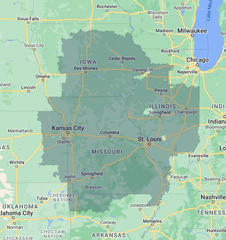
Our Locations
3349 Southgate Ct SW,
Cedar Rapids, IA 52404
(319) 220-5034
14678 E 925 North Rd, Building 5
Bloomington, IL 61705
2401 SE Creekview Dr.
Ankeny, IA 50021
(515) 373-8491
7280 NW 87th Terrace, Suite C-210
Kansas City, MO 64153
(816) 774-1539
211 SE State Route 150
Lee's Summit, MO 64082
(816) 774-1539
1872 State Hwy M
Moberly, MO 65270
(660) 202-8662
3020 N. Martin Ave.
Springfield, MO 65803
(417) 612-8286
1625 Larkin Williams rd.
Fenton, MO 63026
(314) 207-9995