
Why Is My Floor Sinking?
If you have noticed damage to your flooring, there are a few issues that could be at work. The potential causes for the damage will depend on the positioning of (and materials that make up) the floor in question. Understanding what can cause cracks and damage in concrete surfaces and floors in your home can help you to protect your home from severe damage by noticing issues and acting quickly. These are the most common cause of damage to concrete floors:
Expansive Soil
Expansive soil is soil that is heavily reactive to water. For example, clay-based and peaty soils are incredibly expansive, and can grow and shrink dramatically depending on their moisture content. This can cause a number of issues for your foundation, including foundation heave, settlement, and subsidence. Foundation heave, as you might expect, is an issue that causes the foundation (and thereby the floor) of a property to bulge upward. Settlement, however, can cause certain portions of the foundation and floor to sink, while subsidence is more likely to cause your foundation to sink, usually in an uneven fashion.
Any of these issues can and will cause cracks and damage to concrete floors in your home. Weak, loose, or unstable soil can be susceptible to erosion or washout during extreme weather. Soils that are most likely to be weak or unstable are those that have high levels of sand in them. This is most likely to affect exterior surfaces and stairways first, but over time, it can slowly expose your foundation or cause it to shift. This will have a knock-on effect on concrete surfaces and floors within your home.
Hydrostatic Pressure
Hydrostatic pressure is the combined weight of the soil and the water that it holds. Thanks to the nature of concrete (which has vastly lower tensile than compressive strength), this weight is a common cause of spreading cracks in any property. Hydrostatic pressure is also most likely to affect your walls before it causes damage to your concrete floors. For example, a property struggling with hydrostatic pressure may see bowing walls in its basement before concrete floors begin to crack.
These issues can also cause similar damage in adjacent structures on your property, like garages, as well as your exterior concrete slabs and driveways. In some cases, you may see the warning signs of damage in these smaller, more exposed areas before your home is affected. The most common warning sign or red flag when it comes to potentially high or rising hydrostatic pressure is dampness or pooling water around your properties perimeter.
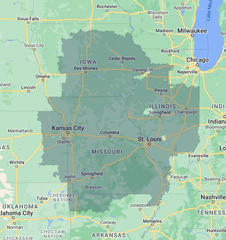
Our Locations
3349 Southgate Ct SW,
Cedar Rapids, IA 52404
(319) 220-5034
14678 E 925 North Rd, Building 5
Bloomington, IL 61705
2401 SE Creekview Dr.
Ankeny, IA 50021
(515) 373-8491
7280 NW 87th Terrace, Suite C-210
Kansas City, MO 64153
(816) 774-1539
211 SE State Route 150
Lee's Summit, MO 64082
(816) 774-1539
1872 State Hwy M
Moberly, MO 65270
(660) 202-8662
3020 N. Martin Ave.
Springfield, MO 65803
(417) 612-8286
1625 Larkin Williams rd.
Fenton, MO 63026
(314) 207-9995